Best Golf Simulator for Low Ceilings
The best golf simulator for low ceilings is not always a full driver setup. If your garage ceiling is tight, the smarter choice may be a compact simulator built around irons, wedges, controlled swings, a safe mat, a net or screen, and a launch monitor that works well indoors.
The best golf simulator setup for low ceilings
The best low-ceiling golf simulator is usually a no-projector or compact simulator setup with a quality mat, strong net or impact screen, side protection, and a launch monitor that works in your indoor space. In many low-ceiling garages, the best setup is designed around wedges, irons, and controlled swings instead of full driver swings.
Before choosing individual products, compare complete garage golf simulator setups to see how low-ceiling, compact, no-projector, and full-screen builds differ. Then use the garage golf simulator dimensions guide to test ceiling clearance from the finished mat height and check the room’s width and depth.
How much ceiling height do you need for a golf simulator?
Ceiling height is one of the biggest limits in a garage golf simulator. The exact space you need depends on your height, posture, swing plane, club length, mat thickness, and comfort level. A shorter golfer with a flatter swing may need less room than a taller golfer with an upright swing.
Low-ceiling practice only
Best for wedges, half swings, punch shots, slow motion drills, contact practice, and launch monitor wedge work.
Iron-focused simulator
Best when you can safely swing shorter clubs but driver feels too close to the ceiling or garage hardware.
Full-swing simulator
Best when you can swing every club comfortably without changing your motion or worrying about the ceiling.
Do the slow-swing test first
Before buying equipment, stand where the mat will go and make slow swings with your longest club. Check the backswing, top of swing, follow-through, ceiling, garage door tracks, lights, and opener hardware.
Best golf simulator types for low ceilings
A low ceiling does not mean you cannot have a simulator. It means you need to choose the right type of simulator for the clubs and swing motions your garage can safely support.
Iron-and-wedge simulator setup
This is often the smartest low-ceiling setup. Use a mat, net or screen, launch monitor, and practice software for irons, wedges, contact drills, and distance control.
- Works better in lower ceilings
- Great for scoring-club practice
- Less risky than forcing driver
- Still useful with launch monitor data
No-projector launch monitor setup
A no-projector setup with a mat, net, launch monitor, and tablet or TV can be easier in low garages because you avoid projector mounting, screen alignment, and overhead equipment.
- Simple and compact
- Good for low-ceiling garages
- No projector mount issues
- Easy to upgrade later
Compact impact screen setup
If your ceiling allows safe swings, a compact impact screen can create a more immersive simulator. Just watch screen height, bounceback, and projector placement.
- More immersive than a net
- Good for projected visuals
- Needs careful ceiling planning
- May not work in very low garages
Practice-first foldaway setup
A foldaway net, movable mat, and portable launch monitor can work well if the garage is tight, shared, or only usable for golf part-time.
- Good for shared garages
- Lower commitment
- Easy to store
- Must be checked safely every session
Which clubs work best in a low-ceiling simulator?
In a low-ceiling garage, club choice matters. Many golfers can safely swing wedges or short irons indoors even when driver is not realistic. That can still make the setup valuable because wedges, short irons, and strike quality are some of the best things to practice at home.
Wedges
Great for distance control, contact, launch, spin, and scoring practice.
Short irons
Good for full or controlled swings if ceiling clearance allows.
Mid irons
Possible in some garages, but test slowly before making full swings.
Driver
Often the hardest club to fit because of length, swing arc, and ceiling risk.
Best launch monitor style for low ceilings
For low ceilings, the launch monitor should fit the indoor space and support the shots you can safely hit. If the garage is also short or narrow, beside-ball camera or hybrid launch monitors may be easier to fit than systems that need more room behind the ball and more ball flight.
Camera and hybrid near-ball systems
Systems such as SKYTRAK ST MAX combine photometric cameras with radar while sitting beside the ball. They can reduce the launch-monitor space needed behind the golfer, which helps when a low ceiling is paired with limited room depth.
- Good for compact garage bays
- Useful into a net or screen
- Can work well for wedge and iron practice
- Need consistent ball placement and protected device positioning
Radar launch monitors
Radar systems can work if your garage has enough depth and ball flight. They may be less ideal if your low ceiling is combined with a shallow room.
- Can work indoors and outdoors
- May need more room
- Good if your garage depth supports it
- Check indoor requirements carefully
Products that fit a practical low-ceiling setup
Ceiling height is controlled by the golfer, club, and finished hitting-surface height—not by the launch monitor alone. These products support compact, no-projector, iron-and-wedge, or upgradeable garage setups. Current images and prices appear in the Lasso cards.
A premium indoor launch monitor that sits beside the ball, saving the space behind the golfer required by many radar systems. Combines photometric cameras and dual Doppler radar for detailed ball and club data.

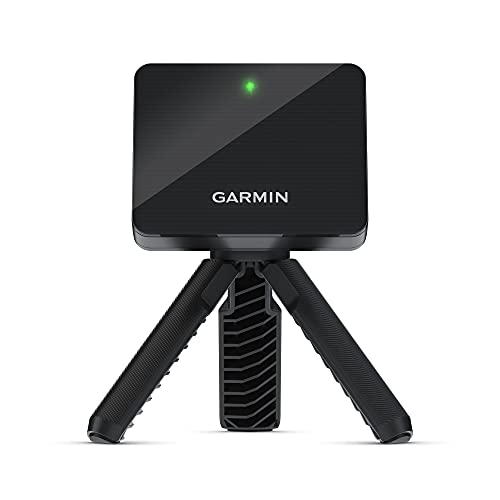
Our top starter pick for garage golfers with enough depth for a radar-based setup. It is portable, simulator-capable, and a strong value for mat-and-net practice without immediately building a premium simulator bay.
A practical starter mat for garage golfers who need a repeatable hitting surface without moving immediately into a premium mat. It works with nets, launch monitors, and basic simulator setups.

A budget-friendly practice net for golfers building their first garage mat-and-net station. It is a practical starting point for basic indoor practice and portable launch-monitor use, but buyers should confirm the selected size and plan additional protection for side misses and high shots.

Golf net vs impact screen for low ceilings
Low ceilings often make a simple net setup more practical, especially if you are focused on irons and wedges. An impact screen can work, but it needs careful planning around screen height, ball flight, bounceback, projector placement, and side protection.
Golf net setup
A net is usually easier in a low-ceiling garage because it is simpler, cheaper, and more flexible than a full screen and projector bay.
- Good for no-projector setups
- Works well with tablets or TVs
- Easier to move or store
- Less immersive than an impact screen
Impact screen setup
An impact screen is better if you want projected visuals, but low ceiling height can limit screen size, launch angle comfort, and projector placement.
- Better simulator feel
- Works with projector setups
- Needs bounceback control
- May be harder in very low garages
Mat and flooring tips for low-ceiling garages
Mat thickness matters in a low-ceiling garage because the mat raises you closer to the ceiling. You still need a mat that protects your joints and the concrete floor, but you should account for its height when testing swing clearance.
Account for mat height
Test your swing from the mat height, not just from the bare garage floor. Even a small height change can matter in a low ceiling.
Choose comfort carefully
Avoid extremely thin mats that punish your wrists and elbows, especially if you plan to practice often.
Keep the stance stable
A stable stance helps you make controlled swings without slipping, shifting, or changing posture indoors.
Low-ceiling golf simulator budget options
Low-ceiling simulator budgets can range from simple practice setups to more complete garage bays. The best budget depends on whether you want basic practice, launch monitor data, projected simulator visuals, or a higher-end indoor setup.
Mat and net
$300–$800Best for controlled wedges, irons, and contact practice.
Mat, net, launch monitor
$800–$2,500+Best for useful feedback without projector complexity.
Screen and projector
$2,500–$7,000+Best if ceiling height supports safe swings and screen setup.
Finished low-ceiling bay
$7,000+Best for carefully planned rooms with custom protection and layout.
Best low-ceiling golf simulator setup comparison
| Setup Type | Best For | Main Gear | Pros | Best Fit |
|---|---|---|---|---|
| Iron-and-wedge simulator | Low ceilings and scoring practice | Mat, net, launch monitor, tablet or TV | Safe, useful, realistic for tight garages | Best Overall |
| No-projector simulator | Small or low garages | Mat, net, launch monitor, display device | Simple, compact, avoids overhead projector issues | Best Small Space |
| Compact impact screen | More simulator feel | Screen, launch monitor, projector, mat, side protection | More immersive if ceiling allows | Best Visuals |
| Foldaway practice setup | Shared garages | Movable mat, folding net, portable launch monitor | Easy to store and use part-time | Best Flexible |
| Full driver simulator | Only garages with enough clearance | Full mat, screen, enclosure, projector, launch monitor | Best full-club experience when safe | Only If Safe |
Mistakes to avoid with a low-ceiling golf simulator
Forcing driver swings
If driver does not clear safely, do not force it. Build the simulator around irons, wedges, and controlled practice.
Testing from the bare floor
Always test from the actual mat height because the mat raises your stance closer to the ceiling.
Ignoring garage hardware
Ceiling height is not the only issue. Garage door tracks, openers, lights, and storage can all interfere with the swing.
Buying a screen that is too tall
Low ceilings can limit screen size, projector setup, and ball flight comfort.
Skipping side protection
Low-ceiling setups still need protection from shanks, side misses, ricochets, and bounceback.
Changing your swing indoors
If the ceiling makes you shorten or manipulate your swing, the setup may be too tight for that club.
Best golf simulator for low ceilings FAQs
Can you have a golf simulator with a low ceiling?
Yes, but the setup may need to focus on wedges, short irons, controlled swings, and a compact launch monitor setup instead of full driver swings.
What is the best golf simulator for a low ceiling?
The best low-ceiling setup is usually a mat, net, launch monitor, and tablet or TV display. This avoids projector complexity and works well for iron and wedge practice. When the garage is also shallow, a beside-ball system such as SKYTRAK ST MAX can reduce launch-monitor space behind the golfer.
Can I hit driver in a low-ceiling golf simulator?
Only if you can swing driver safely without touching or worrying about the ceiling, garage door tracks, lights, or opener hardware. Many low-ceiling garages are better for wedges and irons.
Is a projector bad for low ceilings?
Not always, but low ceilings can make projector mounting, screen height, shadows, and image alignment harder. A no-projector setup may be easier.
Should I use a net or impact screen with a low ceiling?
A net is usually simpler and easier in a low-ceiling garage. An impact screen can work if you have enough safe swing clearance and screen space.
What should I practice if I cannot swing driver indoors?
Focus on wedges, short irons, contact, start line, low-point control, tempo, distance control, and launch monitor wedge gapping.
Low-ceiling recommendations start with swing safety.
Golf Garage Guide does not claim hands-on product testing unless it has actually occurred. This guide prioritizes finished mat height, golfer and club clearance, garage hardware, launch-monitor placement, ball containment, indoor compatibility, software costs, and whether the setup remains useful without driver.
Related garage golf guides
Use these guides to turn a low-ceiling limitation into a safe, compatible practice setup.
Manufacturer references used for product checks
The best low-ceiling simulator is the one you can swing in safely.
A low ceiling does not ruin your garage golf setup. It just changes the plan. Build around safe swing clearance, choose clubs that fit the room, use a good mat and net, add a launch monitor that works indoors, and avoid forcing a full driver simulator into a space that cannot support it.