Best Garage Golf Simulator Under $1,000
The best garage golf simulator under $1,000 is usually a safe, no-projector practice system—not a miniature luxury simulator room. Build around a stable hitting mat, dependable golf net, side-miss protection and a phone or tablet. Add a simulator-capable launch monitor only when the current live total still leaves enough money for the hitting station.
The best under-$1,000 setup is the safest complete system the live budget can support.
For most buyers, start with a full-stance mat, a real-golf-ball practice net, protection for shanks and hard surfaces, and a phone or tablet display. If current prices leave enough room, the Garmin Approach R10 creates the strongest true simulator-capable path. Before choosing it, compare its data, software, subscriptions and total ownership cost with the Rapsodo MLM2PRO. If that package exceeds the budget, use a practice monitor such as the Swing Caddie SC300i or PRGR—or delay the monitor entirely.
Run the complete-price test before ordering the exciting product.
“Under $1,000” must describe the usable hitting system—not one discounted launch monitor. Build a simple cart or worksheet with every required item and recurring cost.
A simulator-capable monitor and a practice monitor are not the same thing.
Launch monitor + compatible simulation
This path can display virtual ball flight or course-style software on a phone, tablet or computer. The Garmin R10 is the main product example in this guide.
Standalone shot metrics
The SC300i provides useful practice feedback through its device, voice output and app, but this guide treats it as a practice-monitor path rather than the complete virtual-course path.
Speed and estimated distance
PRGR can make speed and contact practice measurable while preserving more budget for the net and mat, but it should not be described as a full golf simulator.
Choose one complete under-$1,000 system—not a pile of discounted parts.
Garmin R10 + mat + net
The most simulator-like no-projector path when the current R10 price leaves enough money for a stable mat, dependable net and required side protection.
- Virtual ball-flight potential
- Phone or tablet display
- Strong future upgrade path
- Largest room and budget pressure
SC300i + mat + net
A balanced practice path when carry, ball speed, swing speed, launch and apex matter more than virtual-course play.
- Standalone display and voice
- Preserves more budget than premium tracking
- Simple practice workflow
- Not the main full-simulation recommendation
PRGR + better mat + net
Use a lower-cost practice monitor so a larger share of the budget can improve ball containment, stance stability and garage protection.
- Lowest-cost data path
- Good for speed and contact practice
- More money for the hitting station
- No simulated-course experience
Mat + net now, monitor later
Buy better core equipment first when every monitor package forces a compromise in safety, comfort or room fit.
- Strongest safety margin
- Core gear survives future upgrades
- Works with structured drills
- Least simulator-like on day one
Use this build recipe in order
Six products that support different under-$1,000 build paths
Use the live Lasso prices to assemble the complete package. The launch monitor, mat, net and protection must fit together. Alignment sticks are an optional practice aid after the safe station is funded.
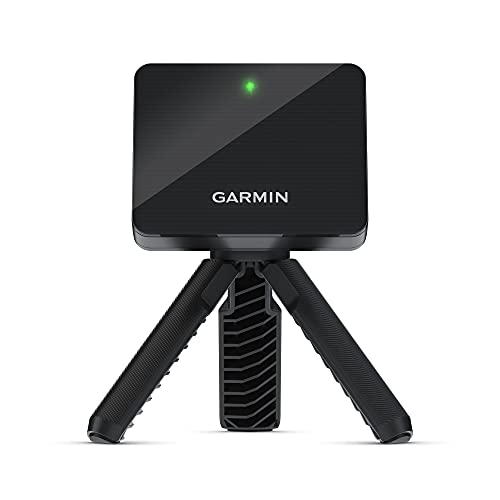
Garmin Approach R10 Launch Monitor
The R10 is the strongest true simulator-capable product in this budget guide when the live package total works. Garmin currently specifies an indoor space of at least 15 feet long, 8 feet wide and 8 feet high, with the unit 6–8 feet behind the ball and the ball at least 8 feet from the net or impact screen. A larger room can improve performance.
Our top starter pick for garage golfers with enough depth for a radar-based setup. It is portable, simulator-capable, and a strong value for mat-and-net practice without immediately building a premium simulator bay.
Choose it when
The garage meets Garmin’s placement guidance and the live total still funds a safe, stable hitting station.
Skip it when
Buying it would force a smaller net, weak side protection, uncomfortable mat or room geometry below the current guidance.
Our verdict
The best under-$1,000 simulator target—but never a guaranteed under-$1,000 complete package.
Swing Caddie SC300i Launch Monitor
Voice Caddie currently lists the SC300i as a portable practice monitor that provides carry, ball speed, swing speed, smash factor, launch angle and apex, with LCD, voice output, remote control and MySwingCaddie support. The current placement guidance says to position it at least 5 feet behind the ball on the same level.
A straightforward portable monitor for golfers who want immediate practice feedback without building a full simulator. Its built-in display, voice output, remote control, and optional app make short garage sessions simple and measurable.

Choose it when
You want easy carry and speed feedback while preserving more money for the mat, net and garage protection.
Best display advantage
The device and voice output reduce dependence on a large screen during simple garage practice.
Our verdict
A strong under-$1,000 practice build component when simulated-course play is not the main goal.
PRGR HS-130A Launch Monitor
PRGR is the budget-first practice option in this guide. It can make speed, smash factor and estimated distance work more measurable while leaving the largest share of the budget for the mat, net and side protection. Treat it as a practice aid rather than a complete simulator platform.
A compact and simple option for golfers focused on swing speed, ball speed, smash factor, and estimated distance. It is best treated as a practice and speed-training tool rather than a complete golf simulator.

Choose it when
The main goal is measurable speed and contact work and a better net or mat will improve the setup more than simulation software.
Do not call it
A virtual golf simulator. It is the lowest-cost data component in a practice-focused package.
Our verdict
The strongest safety-first data compromise when a more expensive monitor consumes too much of the $1,000 total.
GoSports Elite Golf Hitting Mat
The linked Elite mat represents a practical starter surface for a portable garage build. GoSports currently lists the 5 × 4-foot Elite version at 15 mm thick. A full-stance surface helps keep both feet and the ball on one plane, but the mat still needs a clean, stable floor and enough shock absorption for the golfer’s practice volume.
A practical starter mat for garage golfers who need a repeatable hitting surface without moving immediately into a premium mat. It works with nets, launch monitors, and basic simulator setups.

Why the mat comes first
Every monitor path still needs a repeatable ball position, level stance and surface the golfer is willing to use regularly.
Check the floor
Control sliding, inspect concrete moisture and measure ceiling clearance from the top of the installed mat.
Our verdict
A sensible value example for an under-$1,000 station, especially when the setup must remain portable.
GoSports Golf Practice Hitting Net
The linked GoSports model represents a low-complexity portable net path for a no-projector or shared-garage build. GoSports currently lists the standard practice net as a 7 × 7-foot model. The center net does not automatically cover every shank, high wedge or ricochet, so budget for side and ceiling protection where the real miss pattern requires it.
A budget-friendly practice net for golfers building their first garage mat-and-net station. It is a practical starting point for basic indoor practice and portable launch-monitor use, but buyers should confirm the selected size and plan additional protection for side misses and high shots.

Choose it when
The garage needs a portable net that can support simple practice, launch-monitor feedback and easy storage.
Add protection when
The golfer’s shank, pull, push, top-edge or ceiling paths extend beyond the center net.
Our verdict
A practical budget net example, but the complete safety width can be larger than the net’s listed face.
Golf Alignment Sticks
Alignment sticks do not make the station a simulator, but they can make a simple garage build more useful. Use them flat on the floor for target line, stance and ball-position references. Remove them after the drill and never create a hard elevated gate in the club, ball, rebound or walking paths.
A simple training aid for working on alignment, ball position, start line, and setup consistency. It adds structure to garage practice without adding more simulator equipment.

Best use
Return the mat and target line to the same setup and build scored start-line or ball-position drills.
Safer indoor use
Keep sticks flat, outside the strike and walking zones, and replace raised gates with soft visual markers.
Our verdict
A useful final add-on when the core hitting station is already complete and the remaining budget is small.
Under $1,000 can build excellent practice—but rarely a finished projector simulator.
What this budget can do well
- Create a stable full-stance hitting area.
- Contain real golf balls with a practice net and required side protection.
- Use a phone, tablet or laptop for drills and feedback.
- Add a budget monitor when the live package total allows.
- Support structured ball-striking, wedge and speed practice.
- Create a clear path toward a later screen or projector upgrade.
What this budget should not force
- Premium launch monitor plus complete hitting station.
- Large impact-screen enclosure.
- Quality projector, mount and image system.
- Permanent raised floor and full turf finish.
- Premium computer and paid simulator software.
- Luxury lighting, seating, trim and climate control.
Allocate the money by priority, then let live prices determine the final monitor.
Containment
Fund the net, side protection, hard-surface coverage and any ceiling protection required by the real miss pattern.
Hitting surface
Choose a stable full-stance mat that works on the garage floor and does not force the golfer into a split-level stance.
Feedback
Use the remaining budget for the best-fitting monitor—or keep the money until a better monitor purchase is possible.
Display and accessories
Reuse a phone, tablet or laptop and delay cosmetic flooring, premium storage and projector hardware.
A discounted launch monitor is expensive when the garage cannot support its geometry.
Swing clearance
Test the real golfer, finished mat height and longest intended club. Do not change posture, shorten the backswing or steer the finish to avoid the room.
Monitor placement
Confirm the exact device-to-ball position, ball-flight distance, level relationship, lighting and alignment before buying.
Ball containment
Map center shots, both shank lines, pulls, pushes, high wedges, top-edge misses and every hard ricochet surface.
Skipping projection protects the budget and simplifies the entire system.
More money for core equipment
The budget can support a better net, mat, side protection or launch monitor instead of a low-quality image system.
Fewer room constraints
There is no projector throw calculation, ceiling mount, shadow problem, image offset or screen-washout requirement.
Easier shared-garage use
A phone, tablet or laptop can be removed quickly and protected from vehicles, storage and garage temperature swings.
Build the under-$1,000 station so the core pieces survive every upgrade.
Safe hitting station
Mat, net, side protection, marked ball position and simple phone or tablet practice.
Better tracking
Add or upgrade the launch monitor after the room and daily practice routine are proven.
Better display and software
Move to a larger protected display, more capable computer or paid simulation software.
Screen, projector and finish
Add impact screen, enclosure, projector, flooring and lighting only when the room geometry supports them.
Compare the under-$1,000 paths by what they actually deliver.
| Build Path | Main Equipment | Best For | Simulator Experience | Budget Risk | Our Role Rating |
|---|---|---|---|---|---|
| Garmin R10 package | R10, full-stance mat, net, protection, phone/tablet | Golfers who want virtual ball flight and an upgradeable monitor | Strongest in this guide when software and room fit | Live total can exceed $1,000 | Best Simulator Target |
| SC300i practice package | SC300i, full-stance mat, net and protection | Carry, speed, launch and structured practice | Practice metrics rather than primary virtual-course path | Lower monitor pressure on the package | Best Measurable Practice |
| PRGR safety-first package | PRGR, stronger mat, net, protection and drill tools | Speed, contact and lowest-cost feedback | No full simulation | Lowest package pressure | Best Safety-First Value |
| Mat-and-net package | Better mat, net, side protection and existing display | Beginners and buyers planning a later monitor | Practice only unless software is added later | Lowest technology risk | Best Long-Term Foundation |
| Foldaway shared-garage package | Portable net, movable mat, marked positions and storage | Single-car and multi-use garages | Depends on optional monitor | Setup repeatability can suffer | Best Flexibility |
| Cheap projector package | Projector, screen, mat, monitor and protection | Usually not recommended at this total budget | Immersive only if every component works | Highest safety and quality compromise | Usually Wait |
Under-$1,000 garage simulator mistakes to avoid
Calling the monitor price the build price
The package is not complete until the mat, net, protection, display needs, tax and recurring costs are included.
Buying the monitor before measuring
A product is not a bargain when its placement, lighting or ball-flight requirements do not fit the garage.
Forcing a projector
A cheap image system can consume the budget while weakening the equipment that keeps balls contained.
Using a net as the entire safety plan
Map both shank zones, high shots, exposed frame pieces, wall surfaces and rebound paths.
Choosing the thinnest mat
Repeated garage practice needs stable footing and a hitting surface the golfer can use without excessive discomfort.
Confusing practice data with simulation
Describe SC300i and PRGR by the practice results they provide rather than promising virtual-course features.
Ignoring software and memberships
The first-year cost can change when simulator apps, premium features or compatible hardware are required.
Spending the entire budget immediately
Keep room for protection gaps, storage, replacement parts and the first real setup problems.
Practicing without structure
A simple station becomes far more valuable when sessions use scored contact, start-line, wedge and speed drills.
Total ownership cost and a complete hitting station came before the launch-monitor headline.
Golf Garage Guide does not claim hands-on product testing unless it has actually occurred. This guide separates simulator-capable tracking from practice monitors and evaluates each path by current manufacturer documentation, room fit, ball containment, mat usability, live package cost, recurring software, storage and whether the purchase remains useful after future upgrades.
Related garage golf guides
Best garage golf simulator under $1,000 FAQs
Can you build a garage golf simulator for less than $1,000?
Yes, but the most reliable result is usually a no-projector mat-and-net system. A simulator-capable launch monitor can fit only when its current price leaves enough money for the complete safe hitting station.
What is the best under-$1,000 garage simulator?
The best simulator-capable target is usually a Garmin R10 package when the room meets Garmin’s current guidance and the live total includes a proper mat, net and protection. Otherwise, a practice-monitor or monitor-later build is the better package.
What should I buy first?
Measure the garage, then choose the ball-containment system and full-stance hitting mat. Add the monitor only after those pieces and all required protection are funded.
Can the Garmin R10 package stay under $1,000?
Sometimes, depending on current prices and the protection the garage needs. Add the live R10, mat, net, side protection, tax, shipping and software costs before deciding.
Are the SC300i and PRGR golf simulators?
This guide treats them as practice-monitor paths. They can make speed, carry and other practice work measurable, but they should not be presented as the same virtual-course workflow as a simulator-capable launch monitor.
Do I need a projector?
No. A phone, tablet, laptop or protected television can display shot data and compatible simulation software while preserving more budget for the hitting station.
Is a net or impact screen better under $1,000?
A net is usually the better first choice because it avoids projector and image requirements. Add an impact screen later when the budget can support the screen, frame, bounceback space, projector and remaining safety work.
How much space does the Garmin R10 need indoors?
Garmin currently lists a minimum indoor area of 15 feet long, 8 feet wide and 8 feet high, with the R10 6–8 feet behind the ball and the ball at least 8 feet from the net or impact screen.
What is the best upgrade after the first $1,000?
Upgrade the weakest proven part of the system. That may be the launch monitor, side protection, mat comfort, display, software or a larger containment system.
Is an under-$1,000 setup worth building?
Yes, when it creates safe, repeatable practice and the core equipment remains useful later. It is poor value when the budget is stretched across a weak mat, undersized net, cheap projector and incompatible monitor.
Build the complete practice station first, then let live prices decide how much technology fits.
Under $1,000, the winning system is a stable mat, dependable net, complete protection and a display you already own. Add the Garmin R10 when the package total works, choose SC300i or PRGR when practice data is the better compromise, or delay the monitor and protect the long-term value of the hitting station.