Best Golf Simulator for Beginners
Start with a safe, no-projector garage setup that fits your room and gives useful feedback. This guide shows what to buy first, how much space you need, and which upgrades can wait.
The best beginner setup is a no-projector garage simulator
For most beginners, the best starting point is a quality hitting mat, a strong golf net, basic side protection, a beginner-friendly launch monitor, and a phone, tablet, laptop, or TV for feedback. It is simpler, less expensive, easier to move, and easier to upgrade than a full screen-and-projector bay.
Before buying individual components, compare complete garage golf simulator setups to see which build path fits your room and budget. Then use the garage golf simulator dimensions guide to confirm ceiling height, width, total depth, ball-flight space, and launch-monitor placement.
| Beginner Situation | Best Starting Setup | Why It Works |
|---|---|---|
| Small garage | Mat + net + compact launch monitor + tablet | Uses less room and avoids projector mounting problems. See the small garage simulator guide. |
| Low ceiling | Wedge/iron-focused setup with a mat, net, and launch monitor | Lets you practice safely without forcing driver swings. See the low ceiling simulator guide. |
| Budget under $1,000 | Starter launch monitor + net + mat + simple practice tools | Focuses the budget on feedback and ball capture before visual upgrades. See the under $1,000 guide. |
| Long-term upgrade path | No-projector setup first, screen/projector later | Lets you learn the room before committing to a full bay. See the under $5,000 guide. |
Will a beginner golf simulator fit your garage?
There is no single room size that guarantees every golfer and every launch monitor will work. Use these as planning targets, then test your own swing from the top of the mat and confirm the manufacturer’s placement requirements before ordering equipment.
Full driver swings often need more height than iron practice. Test the tallest user with the actual mat thickness included.
More width makes centered hitting and right-/left-handed use easier. Around 14 ft gives substantially more flexibility.
Garmin recommends placing the R10 6–8 ft behind the ball, before adding the golfer and ball-flight distance to the net.
Best beginner golf simulator products to start with
A beginner golf simulator does not need every upgrade at once. Start with the core pieces that make the setup safe and useful: a launch monitor for feedback, a net for ball capture, a mat for a repeatable hitting surface, and a simple training aid that gives your practice structure.
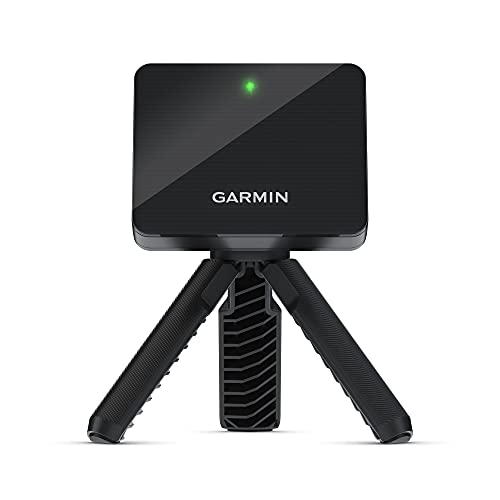
Our top starter pick for garage golfers with enough depth for a radar-based setup. It is portable, simulator-capable, and a strong value for mat-and-net practice without immediately building a premium simulator bay.
A budget-friendly practice net for golfers building their first garage mat-and-net station. It is a practical starting point for basic indoor practice and portable launch-monitor use, but buyers should confirm the selected size and plan additional protection for side misses and high shots.

A practical starter mat for garage golfers who need a repeatable hitting surface without moving immediately into a premium mat. It works with nets, launch monitors, and basic simulator setups.

A simple training aid for working on alignment, ball position, start line, and setup consistency. It adds structure to garage practice without adding more simulator equipment.

Beginner usefulness matters more than a long feature list
Transparency: Recommendations are based on published product specifications, setup requirements, compatibility, price positioning, and garage practicality. We do not claim hands-on testing unless a page explicitly says a product was personally tested.
What makes a golf simulator good for beginners?
A beginner golf simulator should reduce friction. The setup should be safe, simple to start, easy to upgrade, and useful for real practice. Most new garage golfers do not need advanced club data, a premium enclosure, or a full projector bay before they know how often they will use the space.
Easy to start
A beginner setup should not require complicated mounting, wiring, calibration, software setup, or room renovation before the first practice session.
Safe for the garage
The setup should contain shots, protect side misses, limit bounceback risk, and fit your ceiling height, width, and depth.
Useful feedback
Beginners usually get the most value from carry distance, ball speed, launch, start direction, contact quality, and simple progress tracking.
Beginner-friendly does not mean cheap and flimsy
The right starter setup is not always the cheapest setup. It is the one that helps you practice safely and consistently without overwhelming you.
Best golf simulator types for beginners
Most beginners should choose from four setup types: a basic mat-and-net station, a no-projector launch monitor setup, a compact screen simulator, or a full garage simulator package. The right choice depends on your space, budget, and how much simulator experience you want immediately.
Mat and net practice setup
The simplest way to begin. You can work on contact, wedges, irons, tempo, and basic ball striking before building a full simulator bay.
- Lowest complexity
- Good for learning indoor practice
- Easy to upgrade with a launch monitor later
- Limited simulator feedback without data
No-projector launch monitor setup
For many beginners, this is the sweet spot. Use a mat, net, launch monitor, and phone, tablet, laptop, or TV for shot feedback.
- Strong value for garage beginners
- No projector mounting or shadows
- Works well in small and shared garages
- Clear upgrade path into screen/projector later
Compact impact screen setup
Better if you want projected ball flight and a more complete simulator feel. It requires more planning around screen size, bounceback, projector location, and safety.
- More immersive than a net
- Good for entertainment and practice
- Requires projector and screen planning
- Needs more space and protection
Full garage simulator setup
A full setup can include launch monitor, mat, screen, projector, enclosure, turf, software, lighting, and storage. It is best after you know your space and usage.
- Best complete experience
- Great long-term setup
- Higher total cost
- More installation decisions
Beginner golf simulator budget ranges
Beginner golf simulator budgets vary widely. Use these ranges as planning estimates, then confirm current prices and compatibility before buying. The smartest move is to avoid spending the entire budget on one flashy piece while ignoring safety, mat quality, and setup fit.
For a realistic component-by-component breakdown, use our garage golf simulator cost guide. It explains how the launch monitor, mat, net or screen, projector, enclosure, software, subscriptions, protection, and room finishing affect the total.
Mat and net
$300–$800Best for basic indoor practice before adding launch monitor feedback.
Mat, net, launch monitor
$800–$2,500+Best for beginners who want shot feedback without a projector.
Screen and projector
$2,500–$7,000+Best for a more immersive simulator experience when space allows.
Finished simulator bay
$7,000+Best for dedicated rooms and long-term garage simulator builds.
Beginner golf simulator space requirements
Measure before choosing equipment. A beginner simulator can become unsafe or frustrating if the garage is too short, narrow, shallow, or cluttered for the setup you bought.
Measure these first
- Ceiling height from the mat surface
- Total garage depth
- Width around the golfer
- Ball-to-net or ball-to-screen distance
- Launch monitor placement area
- Phone, tablet, TV, or projector location
Watch for these obstacles
- Garage door tracks
- Garage opener motor
- Lights and ceiling fixtures
- Storage shelves and tools
- Cars, bikes, bins, and gym equipment
- Windows, drywall, and exposed hard surfaces
Fit comes before features
Do not choose a simulator because it looks impressive online. Choose one that fits your actual garage, swing, ceiling height, launch monitor requirements, and practice goals.
Best launch monitor choice for beginners
A launch monitor turns a basic hitting station into a feedback-based practice setup. New users should focus on indoor fit, ease of setup, clear data, app experience, and upgrade path instead of chasing every advanced metric immediately.
Compare room requirements, tracking styles, software, subscriptions, and product tradeoffs in our best launch monitors for garage golf guide. For a short or narrow room, also review the small indoor launch monitor guide before choosing a behind-ball radar system.
Useful beginner data
Carry distance, ball speed, launch angle, spin, start direction, and shot consistency are usually more useful at first than overwhelming advanced data.
Indoor compatibility
Confirm the launch monitor works with your room depth, lighting, net distance, display setup, and simulator software plan.
Simple app experience
Choose a system that makes feedback easy to understand. The best data is the data you can act on during practice.
Should beginners use a net, screen, or projector?
A projector is optional. A golf net and launch monitor can be the smarter first step because the setup is cheaper, simpler, and easier to move. An impact screen and projector make more sense when you want a more immersive simulator and your space supports it.
Golf net
Best for a lower-cost, flexible garage setup. Pair it with side protection and a launch monitor for useful practice feedback.
Impact screen
Best when you want projected visuals, virtual golf, and a cleaner simulator bay. Plan for screen tension, buffer space, and bounceback.
Projector
Best after you confirm screen size, throw distance, mounting location, shadows, lighting, and cable routing.
What beginners should practice on a golf simulator
A simulator is only valuable if you use it with a plan. Early practice should focus on contact, start line, wedge distance control, club gapping, tempo, balance, and consistency before obsessing over every advanced number.
Contact
Learn to strike the ball more consistently before chasing distance or advanced numbers.
Wedge distance
Use feedback to learn carry distances with scoring clubs and partial swings.
Start line
Practice starting the ball closer to your intended target line.
Consistency
Track carry gaps, shot pattern, strike quality, and repeatable misses.
Best golf simulator for beginners comparison
| Setup Type | Best For | Main Gear | What to Watch | Best Fit |
|---|---|---|---|---|
| Mat and net setup | Brand-new beginners testing indoor practice | Mat, net, side protection | No shot data unless you add a launch monitor | Best Starter |
| No-projector launch monitor setup | Most beginner garage golfers | Mat, net, launch monitor, phone/tablet/TV | Measure launch monitor depth and display placement | Best Overall |
| Compact screen simulator | Beginners who want virtual ball flight | Mat, screen, launch monitor, projector, protection | Screen size, projector throw, bounceback, and side safety | Best Simulator Feel |
| Small garage simulator | Tight spaces and shared garages | Compact mat, net, launch monitor, display | Width, ceiling clearance, and safe storage | Best Small Space |
| Low-ceiling simulator | Garages with height limits | Mat, net, launch monitor, wedge/iron practice plan | Driver may not be safe indoors | Best Low Ceiling |
Beginner golf simulator mistakes to avoid
Buying before measuring
Confirm ceiling height, width, depth, launch monitor placement, and net or screen fit before buying equipment.
Starting too complicated
A complicated setup can stop you from practicing. Start with something safe, simple, and easy to repeat.
Skipping side protection
A front net or screen is not enough for every garage. Plan for shanks, pulls, pushes, bounceback, and side misses.
Buying the wrong launch monitor
Some launch monitors need more indoor depth, lighting control, or setup precision than your garage can provide.
Ignoring software costs
Apps, simulator software, subscriptions, courses, and device compatibility can change the real cost.
Practicing without goals
Use routines, drills, wedge targets, data goals, and scoring games so the simulator helps you improve.
Best golf simulator for beginners FAQs
What is the best golf simulator for beginners?
For most beginners, the best golf simulator is a simple no-projector garage setup with a hitting mat, golf net, launch monitor, side protection, and a phone, tablet, laptop, or TV for feedback.
Do beginners need a projector golf simulator?
No. A projector is optional. Many beginners are better off starting with a net, launch monitor, and display device, then adding a screen and projector later.
How much should beginners spend on a golf simulator?
A basic mat-and-net setup can start in the few-hundred-dollar range, while a more useful launch-monitor setup often costs more. Full screen, projector, enclosure, and software builds can increase the total quickly, so start with a balanced budget.
Is a golf net enough for a beginner simulator?
A golf net can be enough if it is paired with a good mat, side protection, and either a launch monitor or a structured practice plan. It is often the simplest first step for garage golf.
What launch monitor data matters most for beginners?
Beginners should start with carry distance, ball speed, launch angle, spin, start direction, strike quality, and shot consistency. Advanced club data can come later.
What is the best upgrade path for a beginner golf simulator?
Start with a safe mat-and-net setup. Add a launch monitor for feedback. Then upgrade lighting, side protection, software, impact screen, projector, and enclosure as your budget and space allow.
Can a beginner use a golf simulator in a small garage?
Yes, but the setup should be chosen around ceiling height, garage width, total depth, launch monitor requirements, and safe ball containment. Small garages often work best with compact no-projector setups.
The best beginner simulator is the one you will actually use.
Start with a safe, simple setup that fits your garage and gives useful feedback. A mat, net, launch monitor, side protection, and simple display can help you practice consistently now while leaving room to upgrade into better software, screens, projectors, and enclosures later. When you are ready to compare the larger build paths, use the complete garage golf simulator buying guide.