Best Garage Golf Simulator Under $5,000
A $5,000 budget can build a real garage golf simulator, but only when the launch monitor, hitting surface, ball containment, display, software and room protection are treated as one system. The strongest build is not the one with the most expensive individual product—it is the one that reaches checkout under the cap and still leaves the golfer with safe, repeatable practice.
The best under-$5,000 simulator is usually one of three builds.
A balanced screen build uses a value launch monitor, practical enclosure, value mat and correctly calculated projector. A data-first build spends more on the current premium launch monitor and uses a net or protected television instead of forcing projection. An upgrade-ready build uses Garmin or Rapsodo with a strong mat and containment system now, then adds the projector after the room and software preferences are proven.
Price the complete first-year system—not the seven product cards added together.
The products in this guide are alternatives and building blocks. Build one compatible path, then reserve money for every item needed to install and operate it.
$5,000 can build a real simulator, but it does not make every premium component affordable at once.
What the budget can do well
- Buy a current simulator-capable launch monitor.
- Use a full-stance value or premium hitting mat.
- Build a strong net or practical impact-screen enclosure.
- Add a golf-simulator projector when the other components remain funded.
- Use simulator software on a compatible phone, tablet or computer.
- Create a safe, repeatable garage practice and entertainment system.
What can push the build over the cap
- Current premium monitor plus premium mat, screen and projector.
- High-end computer and multiple simulator subscriptions.
- Custom electrical, garage-door or structural work.
- Full-room turf, wall padding and luxury finish work.
- Professional installation and custom enclosure fabrication.
- Tax, freight and accessories excluded from advertised prices.
Choose the package philosophy before choosing the individual products.
Balanced projected screen build
Use Garmin R10 or Rapsodo MLM2PRO, the GoSports enclosure, GoSports Elite mat and BenQ AH700ST only when current prices leave room for software, computer hardware, side protection and installation.
- Closest full-simulator experience
- Strong entertainment value
- Most geometry to calculate
- Highest risk of crossing the cap
Data-first premium monitor build
Use the current SKYTRAK ST MAX with a premium mat and protected net or television. Delay the projector or complete enclosure when the monitor and mat consume most of the budget.
- Highest tracking priority
- Near-ball room layout
- Strong upgrade path
- Less visual polish at first
No-projector screen-or-net build
Use Garmin or Rapsodo, the best mat and containment the room needs, and a phone, tablet, laptop or protected television. Add the projector after the hitting station and software workflow are proven.
- Best budget control
- Works in shared garages
- Fewer mounting and shadow problems
- Projector remains an easy later upgrade
Approve the build in this order
These products represent alternatives across tracking, containment, projection and hitting surfaces.
Do not buy all seven. Build one compatible path and use the live Lasso prices to verify the complete total. The current premium tracking option is SKYTRAK ST MAX; Garmin and Rapsodo preserve more money for the screen, projector and room.
SKYTRAK ST MAX Launch Monitor
ST MAX is SKYTRAK’s current premium home launch monitor and combines photometric cameras with dual Doppler radar. It is the strongest tracking-first product in this guide, especially when a near-ball layout fits better than a radar device behind the golfer. Its price can force the projector, enclosure or premium mat into a later phase, so it belongs in a data-first build rather than an automatic full package.
A premium indoor launch monitor that sits beside the ball, saving the space behind the golfer required by many radar systems. Combines photometric cameras and dual Doppler radar for detailed ball and club data.

Choose it when
Indoor tracking quality is the highest priority and the room supports a protected near-ball device position.
Protect the budget
Use a net or existing television first when adding the projector would weaken containment, mat quality or year-one software support.
Our verdict
The premium data-first choice—not the easiest path to a complete projected package below $5,000.
Rapsodo MLM2PRO Launch Monitor
MLM2PRO combines radar and two cameras, supports measured spin rate and spin axis with compatible RPT balls, and can connect with third-party simulation platforms. Rapsodo currently recommends a little more than 14 feet of total indoor depth: 8 feet from ball to net or screen plus roughly 6.5–8.5 feet behind the ball. Its lower monitor cost can preserve enough of the $5,000 cap for an enclosure, projector and mat.
A strong choice for golfers who want app-based practice, video feedback, measured shot data, and simulator play. It combines Doppler radar with two cameras and works especially well for golfers who enjoy a mobile-first practice experience.

Choose it when
The garage has radar depth and the buyer wants to preserve more money for an enclosure, projector and protected hitting surface.
Price the workflow
Include the current premium membership, compatible mobile device, RPT balls and any third-party simulation software.
Our verdict
The strongest balanced monitor for a visually complete under-$5,000 target when the required depth is available.
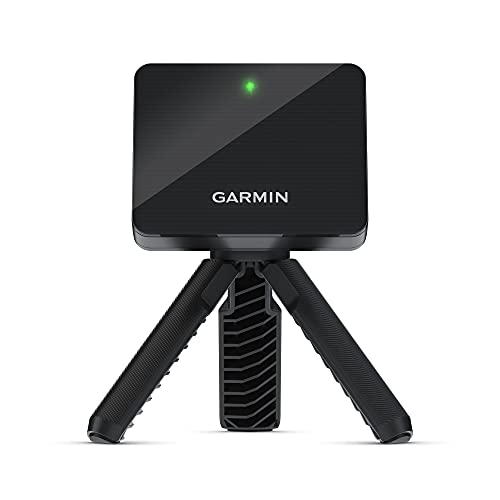
Garmin Approach R10 Launch Monitor
Garmin R10 leaves the largest share of the budget for the enclosure, projector, mat and room protection while still providing a simulator-capable path. Garmin currently lists a minimum indoor space of 15 feet long, 8 feet wide and 8 feet high, with the R10 6–8 feet behind the ball and the ball at least 8 feet from the net or impact screen.
Our top starter pick for garage golfers with enough depth for a radar-based setup. It is portable, simulator-capable, and a strong value for mat-and-net practice without immediately building a premium simulator bay.
Choose it when
The room meets Garmin’s current placement guidance and the buyer wants maximum budget left for the simulator environment.
Best package role
Pair it with a value mat and practical enclosure when a projected experience matters more than premium near-ball tracking.
Our verdict
The strongest budget-balancing option for a complete screen-and-projector target below $5,000.
GoSports Golf Simulator Enclosure
The linked enclosure represents a practical frame, screen and side/top containment foundation for a projected garage bay. GoSports currently lists its 10 × 8 model at 10 feet 7 inches wide, 8 feet high and 6 feet deep with a 4:3 impact screen, steel frame, internal padding and side/top enclosure. Confirm the exact Amazon variant because a different selected size changes the room, image and ball-position plan.
A complete golf simulator enclosure kit for buyers who want the frame, impact screen, side and top containment, and internal frame padding organized as one system. It is the strongest starting point for a dedicated projected garage bay, but the selected enclosure size and complete room footprint must be measured carefully.

Choose it when
The room can support the complete enclosure footprint plus golfer, monitor, screen buffer and projector geometry.
Protect the edges
Confirm every frame, base, side opening, ceiling line and bounceback path instead of assuming the enclosure solves every miss.
Our verdict
A strong value foundation for the balanced projected build when the exact selected size fits.
BenQ AH700ST Golf Simulator Projector
AH700ST is a purpose-built golf-simulator projector with 4,000 ANSI lumens, 1080p resolution, laser light source, a 0.69–0.83 throw ratio and 1.2× optical zoom. BenQ also supports screen-fill tools for common simulator aspect ratios. Calculate the image on the finished screen before buying—the projector should never be chosen from brightness alone.
A golf-specific 1080p laser short-throw projector designed for dedicated simulator bays. Its brightness, automatic screen-fit features, quick setup tools, and golf-oriented design make it a strong overall choice when ease of installation matters more than 4K resolution.

Choose it when
The finished screen dimensions and aspect ratio have been measured and the throw calculation leaves a safe mount location.
Delay it when
The projector would consume money needed for the launch monitor, mat, screen containment, computer or year-one software.
Our verdict
The best dedicated projector example here, but still the first premium component to postpone when the total crosses $5,000.
SIGPRO Softy 4 × 10 Golf Mat
The linked SIGPRO Softy represents the premium practice-quality path. The current 4 × 10 model measures 4 feet by 10 feet by 2.5 inches high, weighs approximately 31 pounds and uses a replaceable Softy hitting strip. That height must be included in ceiling clearance, screen impact area, launch-monitor level and surrounding-floor transitions.
A premium hitting mat for golfers who practice frequently and want a more forgiving strike surface. It is best suited to serious garage simulator builds where comfort, durability, and joint protection matter more than the lowest price.

Choose it when
The buyer practices frequently, wants the hitting surface to remain through future upgrades and can accept the budget and height impact.
Re-measure the room
Check ceiling, screen, projector and launch-monitor geometry from the top of the installed 2.5-inch mat.
Our verdict
The premium mat choice for a data-first or no-projector build; harder to combine with every premium visual component below $5,000.
GoSports Elite Golf Hitting Mat
The linked GoSports Elite mat represents the value path that preserves budget for the enclosure and projector. GoSports currently lists the Elite 5 × 4-foot version at 15 mm thick with six teeing positions, three rubber tees and non-slip foam backing. It is easier to fit into a complete projected package, but the golfer should still test comfort, movement and wear on the actual garage floor.
A practical starter mat for garage golfers who need a repeatable hitting surface without moving immediately into a premium mat. It works with nets, launch monitors, and basic simulator setups.

Choose it when
The current enclosure and projector prices would push the complete build over the cap with a premium mat.
Upgrade later
Keep the full-stance platform and add a premium hitting strip or mat after the monitor and visual system are proven.
Our verdict
The most practical mat example for a visually complete projected package targeting a hard $5,000 cap.
The launch monitor price is only the beginning of the simulator workflow.
Manufacturer membership
Confirm which data, video, practice, course and third-party integration features require a current paid plan. Price the first year and decide which features are actually necessary.
Third-party simulation software
Check the monitor’s current support for GSPro, E6, Awesome Golf or other platforms, plus any connector, license or membership requirements.
Computer or mobile device
Verify the exact operating system, graphics hardware, ports, Wi-Fi, Bluetooth and display output. Do not assume an existing laptop can run the desired software at the desired resolution.
Price the complete year-one software path
- Manufacturer membership or premium app tier.
- Third-party simulator license.
- Required marked or RPT golf balls.
- Computer, tablet or phone upgrades.
- Adapters, HDMI cables and network hardware.
- Courses, add-ons or cloud-storage services.
Buy the workflow—not the feature list
A lower-cost monitor can create the better simulator when its software runs on hardware you already own. A premium monitor can become the better long-term choice when its indoor placement and data improve daily practice. The right answer depends on the complete operating cost and how the golfer will actually use the room.
A $5,000 package can fail when one component requires a different garage.
Swing envelope
Test the real golfer on the finished mat with every intended club. The backswing and finish must remain natural and unrestricted.
Monitor geometry
Confirm the exact device-to-ball position, ball-flight distance, level relationship, lighting and handedness workflow.
Screen or net depth
Include the frame, screen slack, rear buffer, side protection, top protection and the golfer’s safe distance from rebound.
Projector image path
Calculate the image from the finished screen ratio and dimensions, then check mount, shadows, garage-door travel and cable routes.
Projection belongs in the build only when the screen and room are already solved.
Enclosure + projector
Best for a dedicated garage with controlled lighting, adequate screen buffer and a live budget that still supports the monitor, mat, computer, software and protection.
Screen or net + protected TV
Preserves simulator software and a large image without projector throw, ceiling mounting, image offset or shadow problems.
Portable net + mobile display
Keeps the golf system reversible and leaves more money for the launch monitor, mat and side protection. It is the easiest path to prove before permanent work.
Approve the impact screen first
- Exact visible width, height and aspect ratio.
- Frame and enclosure footprint.
- Screen slack and rear-wall buffer.
- Side/top coverage and frame padding.
- Ball position and intended impact area.
- Replacement-screen availability.
Then approve the projector
- Throw-ratio calculation for the finished image.
- Mount position outside the club and ball paths.
- Shadow path from golfer and equipment.
- Native resolution and input hardware.
- Brightness under the planned room lighting.
- Garage-door, ventilation and cable conflicts.
A $5,000 simulator is not complete until every realistic miss and rebound path is controlled.
Both shank zones
Protect the close wall and the opposite side. Offset hitting changes the width and direction of the danger zone.
Ceiling and top edge
Trace wedges, pop-ups, top-edge misses, garage-door hardware, lights, opener rails and overhead storage.
Frame and hard surfaces
Pad exposed poles, bases, brackets, corners and nearby walls that can create hard ricochets.
Screen bounceback
Control screen tension, rear clearance, ball speed, frame position and the golfer’s distance from the impact surface.
Equipment protection
Keep the launch monitor, projector, television and computer outside the club, ball, rebound and walking paths.
Gradual testing
Begin with slow swings and reduced-risk shots, then increase club length and ball speed only after the complete system remains stable.
Allocate the money by the job each component performs.
Containment and room safety
Fund the net or screen, frame, side/top protection, hard-surface padding and safe equipment placement before cosmetic upgrades.
Launch monitor and mat
Choose the tracking technology and hitting surface that fit the room, practice goals and daily usage volume.
Software and computer
Reserve money for the first-year membership, simulator license, compatible hardware, adapters and display output.
Projector and finish
Add the projected image, turf, lighting, storage and appearance only after the system remains under the cap.
The best $5,000 package leaves a clean path to the next version.
Room and hitting station
Prove the golfer, mat, ball position, containment, side protection and equipment storage.
Tracking and software
Install the monitor and run the real practice or simulator workflow on compatible hardware.
Screen and display
Add the impact screen, projector or protected television after the room geometry and software preferences are stable.
Flooring, light and comfort
Finish turf transitions, lighting scenes, storage, airflow, heating, sound control and seating after regular use exposes the real needs.
Compare under-$5,000 packages by the experience they prioritize.
| Build Path | Suggested Core | Best For | Display | Main Tradeoff | Budget Risk | Our Role Rating |
|---|---|---|---|---|---|---|
| Balanced projected build | Garmin or Rapsodo + GoSports enclosure + value mat + calculated projector | Practice and immersive entertainment | Impact screen and projector | Monitor tier and mat quality may need restraint | High when software/computer are not already owned | Best Overall Target |
| Premium data-first build | SKYTRAK ST MAX + premium mat + protected net or TV | Frequent practice and higher tracking priority | Phone, tablet, computer or TV | Projection and finished enclosure may wait | Medium to high | Best Practice Quality |
| Rapsodo screen build | MLM2PRO + enclosure + value mat + projector | Video, measured spin and screen experience | Projector or separate display | Requires radar depth, membership and RPT workflow | Medium | Best Balanced Value |
| Garmin visual-first build | R10 + enclosure + value mat + AH700ST target | Maximum room budget for a projected experience | Projector | Deep room requirement and radar environment | Medium | Best Budget Balance |
| Premium no-projector build | Better monitor + SIGPRO mat + net + protected TV | Small or shared garages and serious practice | TV, computer or tablet | Less immersive than projection | Low to medium | Best Upgrade Path |
| Foldaway shared-garage build | Garmin or Rapsodo + portable containment + movable mat | Vehicle or storage garage | Mobile device or protected TV | Requires repeatable setup and storage discipline | Low | Best Flexibility |
Under-$5,000 garage simulator mistakes to avoid
Adding every recommended product
The seven Lasso cards are alternatives. Build one compatible package instead of treating the page as a seven-item shopping list.
Using the monitor price as the package price
Include mat, containment, software, computer, display, protection, tax, shipping and room work.
Buying projection before screen geometry
Calculate the finished image, aspect ratio, throw, mount, shadows and garage-door conflicts before ordering the projector.
Buying an older monitor without comparison
Compare the current manufacturer lineup, memberships, warranty, seller and compatibility before buying remaining older inventory.
Ignoring recurring software
A package below $5,000 on day one can exceed the plan when the required first-year memberships and computer upgrades are added.
Sacrificing side protection for visuals
A bright projected image does not control shanks, ceiling misses, frame strikes or hard ricochets.
Measuring from bare concrete
Use the finished mat or platform height when checking ceiling, screen, launch-monitor and projector relationships.
Choosing radar without depth
Garmin and Rapsodo require space behind the ball and ball flight toward the net. Verify the current official guidance.
Finishing the room before proving it
Test the golfer, monitor, mat, containment and software repeatedly before adding permanent turf, trim and built-in storage.
Total ownership cost and system compatibility came before the most expensive product.
Golf Garage Guide does not claim hands-on product testing unless it has actually occurred. This guide uses current manufacturer documentation, indoor placement, launch-monitor technology, mat dimensions, enclosure geometry, projector specifications, software and membership requirements, protection needs, year-one cost and future upgrade value.
Related garage golf guides
Best garage golf simulator under $5,000 FAQs
Can you build a complete garage golf simulator for less than $5,000?
Yes, when the package is balanced across tracking, mat, containment, display, software and protection. A value launch monitor and mat make a projected enclosure more realistic; a premium monitor may require a no-projector first phase.
What is the best overall build under $5,000?
The best overall target is usually Garmin R10 or Rapsodo MLM2PRO with a practical enclosure, value full-stance mat and properly calculated projector—only when the complete live total includes software, computer hardware and protection below the cap.
Is SKYTRAK ST MAX too expensive for this budget?
It can fit a data-first package, but a premium mat, enclosure and projector may not all fit with it. Use a net or protected television first when tracking quality is more important than the projected room.
Is Rapsodo MLM2PRO or Garmin R10 better for a screen build?
Both can preserve room in the budget for a screen system. Rapsodo offers camera/video features and measured indoor spin with compatible RPT balls, while Garmin can leave more money for the room. The garage must meet the current placement guidance for the chosen device.
Should I choose the premium or value hitting mat?
Choose the premium mat when practice frequency, comfort and replaceable wear components are the priority. Choose the value mat when a premium mat would force the monitor, containment or complete projected package over the cap.
Do I need a projector?
No. Simulator software can run on a phone, tablet, laptop or protected television. Skipping projection can fund a better monitor, mat, containment system or computer.
How much room does Garmin R10 need indoors?
Garmin currently lists at least 15 feet long, 8 feet wide and 8 feet high, with the R10 6–8 feet behind the ball and the ball at least 8 feet from the net or screen.
How much room does Rapsodo MLM2PRO need indoors?
Rapsodo currently recommends a little more than 14 feet of total depth: 8 feet from the ball to the net or screen plus 6.5–8.5 feet behind the ball for the monitor.
What costs are usually forgotten?
Buyers often miss memberships, third-party software, computer or tablet upgrades, marked balls, protective cases, cables, mounts, adapters, tax, freight, side protection, replacement screens and room work.
What should I upgrade first after the $5,000 build?
Upgrade the weakest proven part of the system. That may be the monitor, hitting strip, screen, computer, projector, software, side protection, lighting or storage. Regular use should determine the next purchase.
Build the simulator that reaches checkout under $5,000—not the wish list that starts under $5,000.
Measure the room, fund the complete safety envelope and choose the monitor that fits the golfer and garage. Use Garmin or Rapsodo when a projected screen build is the priority. Use SKYTRAK ST MAX and a better mat when tracking and practice quality matter more than immediate projection. Add the enclosure, projector, software and room finish only when the live first-year total remains inside the cap.